Tripo Alternative

PicoBerry vs Tripo — the Tripo alternative that runs Tripo v3.1

PicoBerry gives game and VR teams a whole pipeline instead of a single generator: choose the best engine for each asset — Tripo v3.1, Meshy 6 or Hunyuan3D 3.1 — then refine, UV, remesh and push straight into Unity, all in one platform with a bundled API. Tripo v3.1 is one of those engines, so you keep the model you like and gain the whole workflow around it.

See the comparison

One workspace, several engines: pick the best model per asset, then refine it in place.

Engines inside PicoBerryTripo v3.1Meshy 6Hunyuan3D 3.1+ image models+ PB Remesh · UV · Palette

What is the best Tripo alternative for game developers?

For teams that want more than one generator, PicoBerry. It runs Tripo v3.1 as a selectable engine alongside Meshy 6 and Hunyuan3D 3.1, so you can pick the best result per asset — then carry it through refine, UV, remesh, a bundled REST API and a free Unity editor without changing tools or accounts. One platform, one credit pool, one workflow. If your work is only ever high-volume generation on Tripo's own models, Tripo direct is a fine standalone choice; PicoBerry's advantage is the engine choice and the complete workflow around the same models.

Should you use PicoBerry or Tripo?

The honest split isn't really about price — it's about shape. Tripo is a focused single-vendor generator and it's very good at that. PicoBerry is a multi-engine workflow: the same Tripo v3.1 models plus two more engines, with refine steps, a bundled API and a free Unity editor folded into one platform. Want depth on one vendor? Tripo fits. Want engine choice and a complete path into Unity? That's PicoBerry.

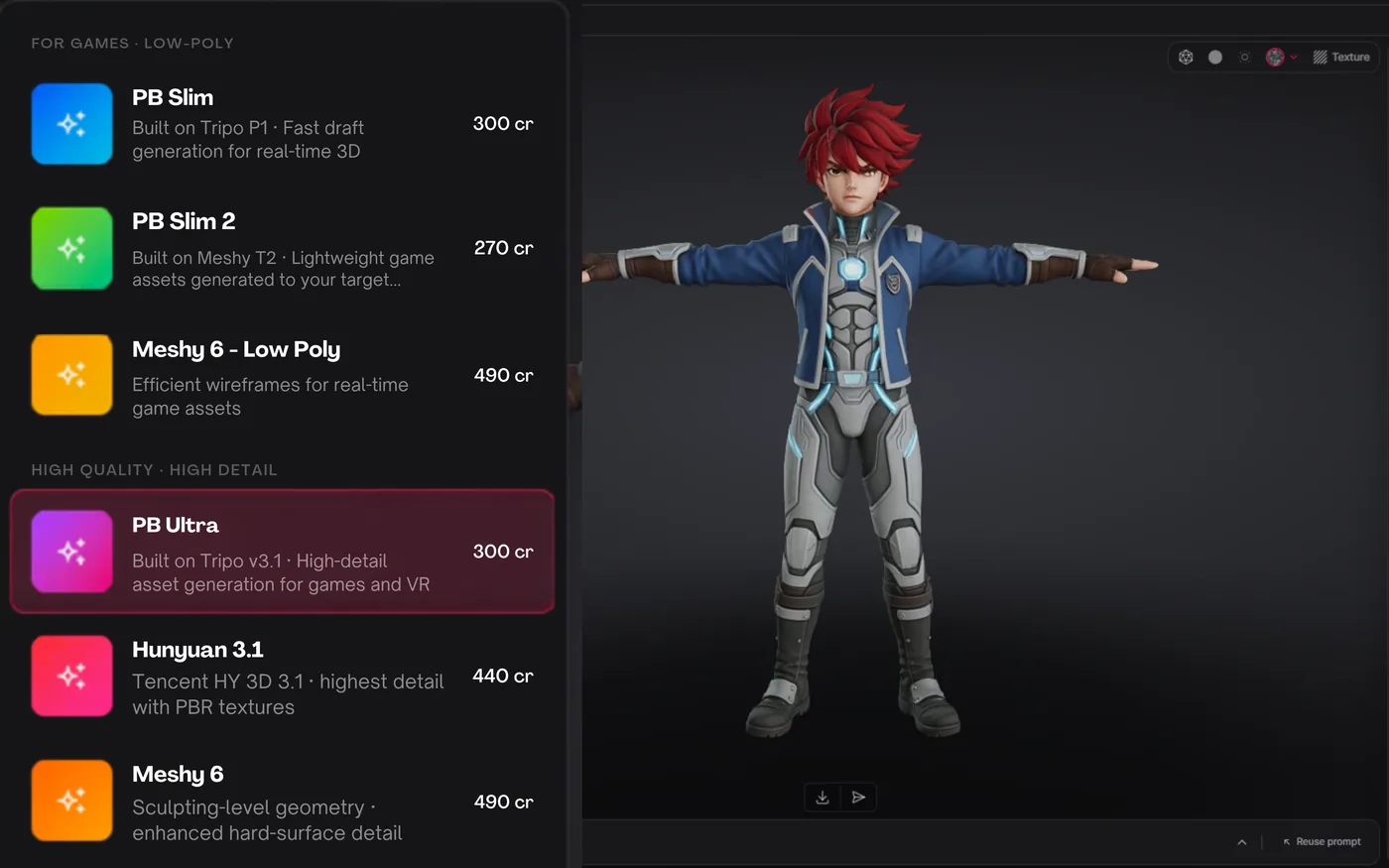
The PicoBerry model picker with an engine built on Tripo v3.1 selected among engines like Meshy 6 and Hunyuan3D 3.1, beside a generated anime character in a sci-fi suit

The current Tripo generation

Tripo v3.1 is selectable per generation inside PicoBerry, so you aren't trading down to an older model to gain a platform. Switch to Meshy 6 or Hunyuan3D 3.1 on the prompts where Tripo isn't the strongest read — same asset list, same credits.

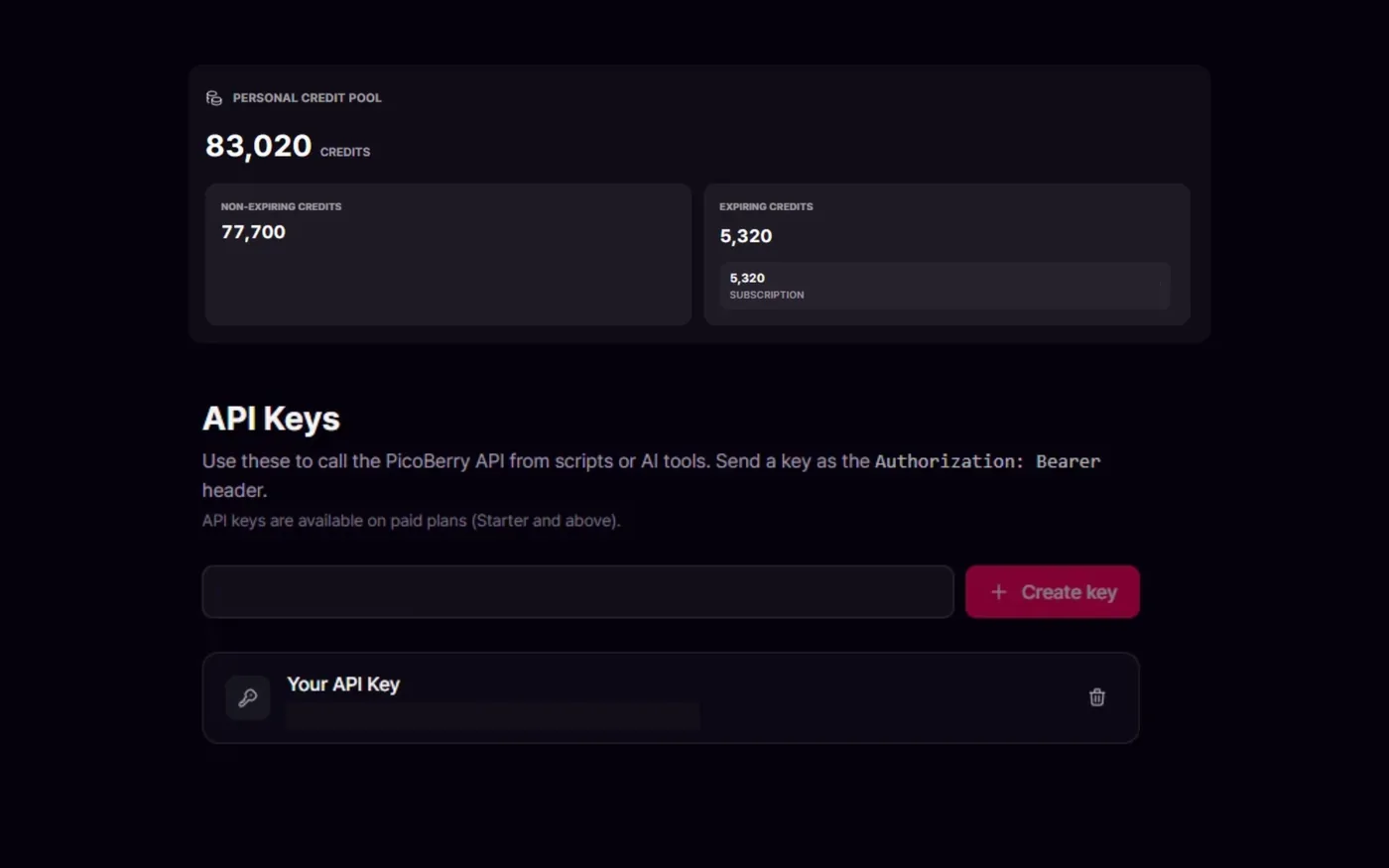
The PicoBerry account screen showing one personal credit pool alongside the API Keys panel, where the same credits power both the web app and API calls

API inside the plan, not beside it

Tripo's API is a separate product on its own billing. PicoBerry's async /v1 API draws on the same credits as the web app, so prototyping in the UI and running it in production come out of one pool — and one invoice.

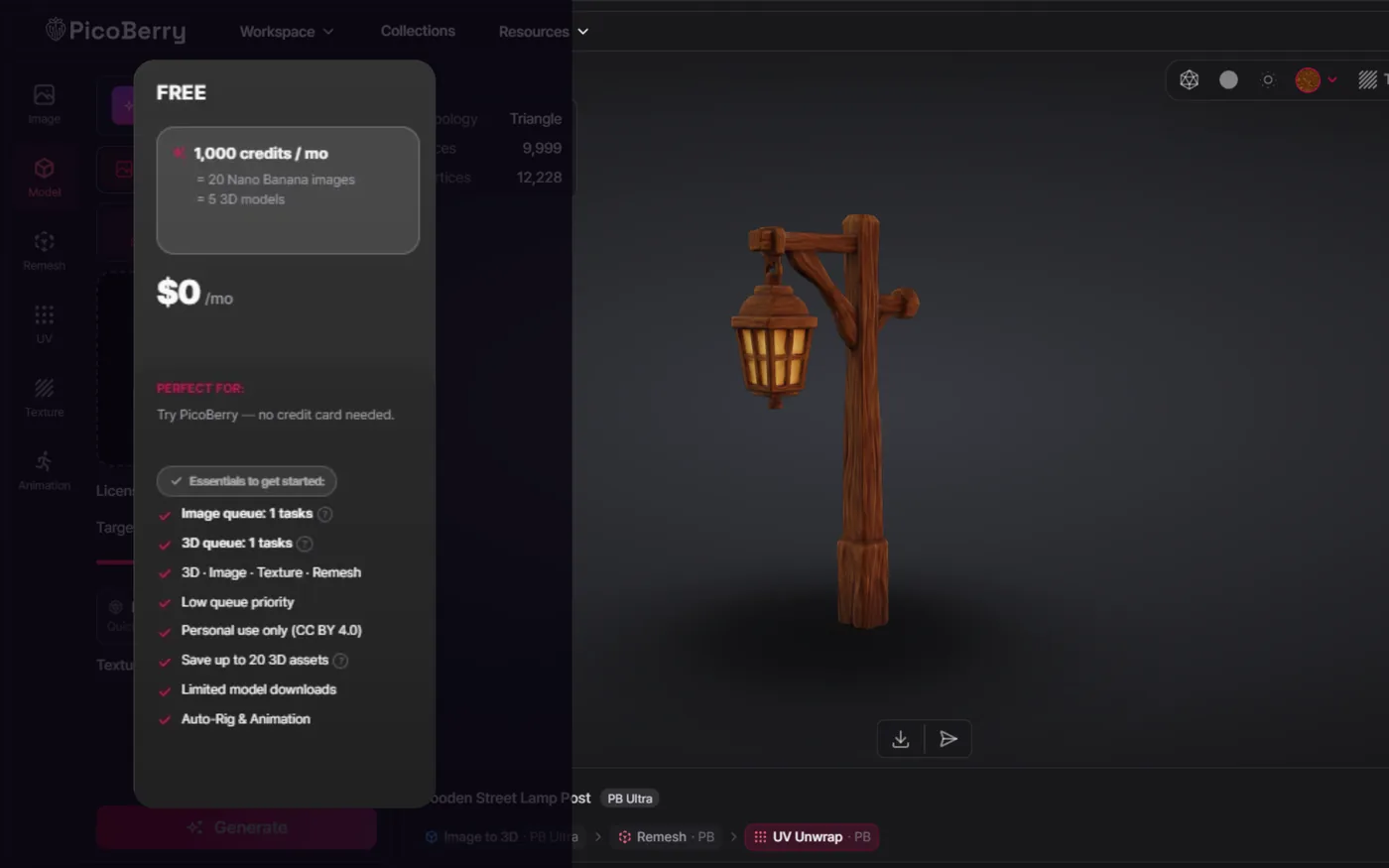
PicoBerry's Free plan card showing 1,000 credits per month at $0, covering 3D, image, texture and remesh, next to a live UV-unwrap session in the workspace

A free tier you can actually evaluate on

PicoBerry's free tier gives you 1,000 credits a month at $0, across 3D, image, texture and remesh, so you can run the full workflow on real assets before you pay anyone or commit to a single vendor.

How do PicoBerry and Tripo compare?

This table is about capability and workflow, not a price war — both are affordable. The difference is how much of the pipeline each one actually covers.

DimensionPicoBerryTripo Studio
Generation enginesTripo v3.1, Meshy 6, Hunyuan3D 3.1 — multi-model choiceTripo's own models
Image generationYesYes
Beyond generate / refineParts breakdown, UV unwrap, palette extraction, quad remeshRemesh, retexture, rig
REST APIIncluded on every paid plan — same credit pool as the appSeparate API product, billed on its own
MCP serverPublished npm package for agents and toolsFirst-party server (alpha, Blender-oriented)
Bundled Unity editorUModeler X free on every planNone
One-click DCC bridgesBlender · Unreal · Godot · UnitySee Tripo integrations
Commercial licenseFull commercial on all paid plansCommercial on Pro and up
Entry plan$12 / mo$19.90 / mo
Free tierYes — personal useYes — limited, no commercial use

Where do PicoBerry and Tripo actually differ?

One contract instead of two

Going to production on Tripo means adding its API as a separate product with separate billing. On PicoBerry the async /v1 API is part of every paid plan and spends the same credits, so the model your artists picked in the UI is the model your service calls — no second contract, no second budget line.

A fallback when Tripo isn't the best read

Every generator has prompts it handles less well. On Tripo direct, a weak result means re-rolling the same model. Inside PicoBerry it means switching the dropdown to Meshy 6 or Hunyuan3D 3.1 and generating again — same asset list, same credits, no new account.

Topology work as its own step

Quad remesh, UV unwrap, palette extraction and parts breakdown are individual operations on an existing asset, not side effects of regenerating it. A low-cost Blender remesh handles poly reduction, so dropping a poly count doesn't spend premium generation credits.

First-party MCP for agents

PicoBerry ships its own MCP server as a published npm package, so an agent in Claude Code or Cursor can generate, refine and export directly against your plan. Tripo's own MCP server is early-stage (alpha) and geared to its Blender add-on.

Image generation

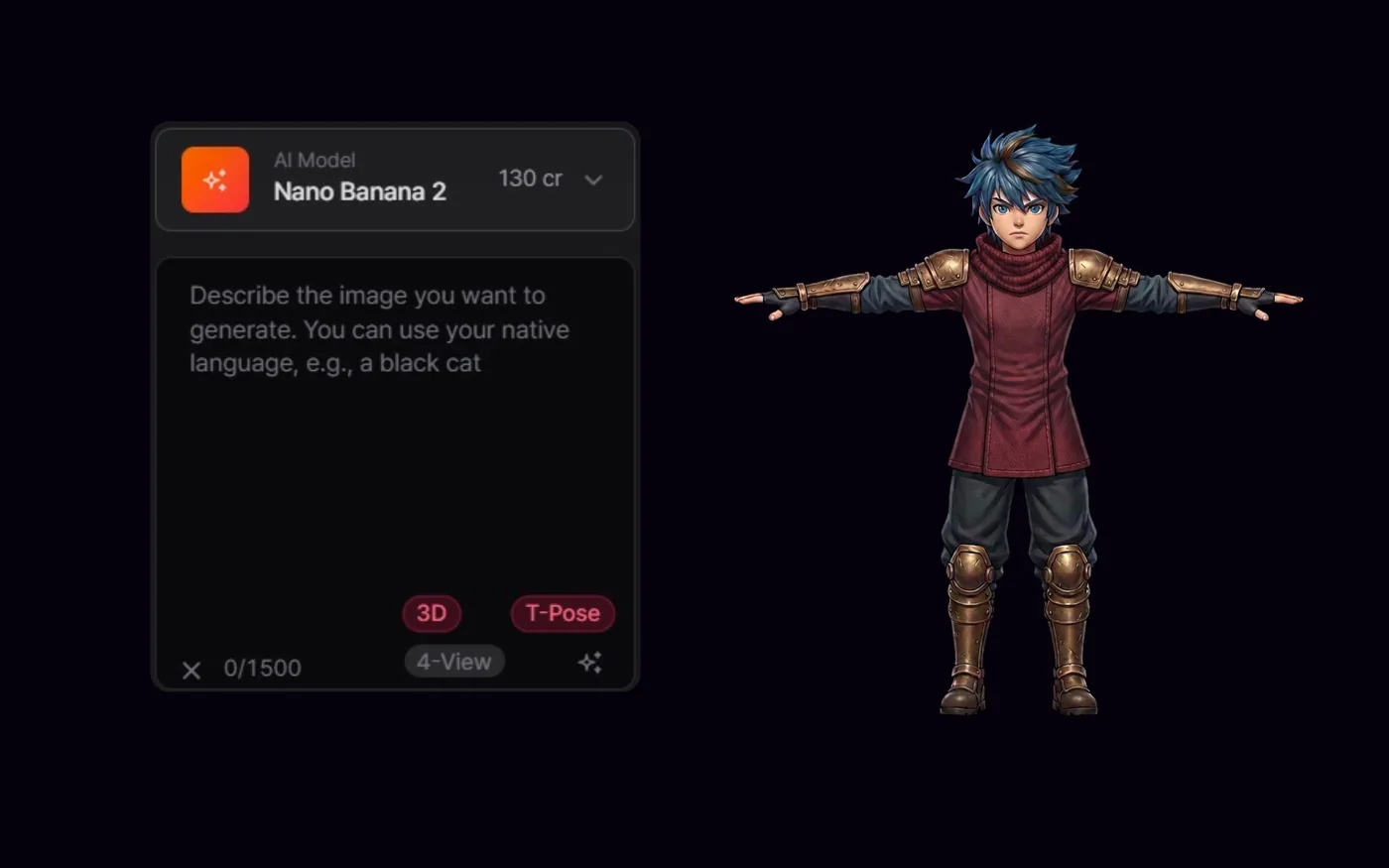
PicoBerry's image panel with the T-Pose option enabled, generating a clean front-facing T-pose reference of an armored anime character ready to rig

T-Pose

Generate a clean T-pose character reference, ready to rig.

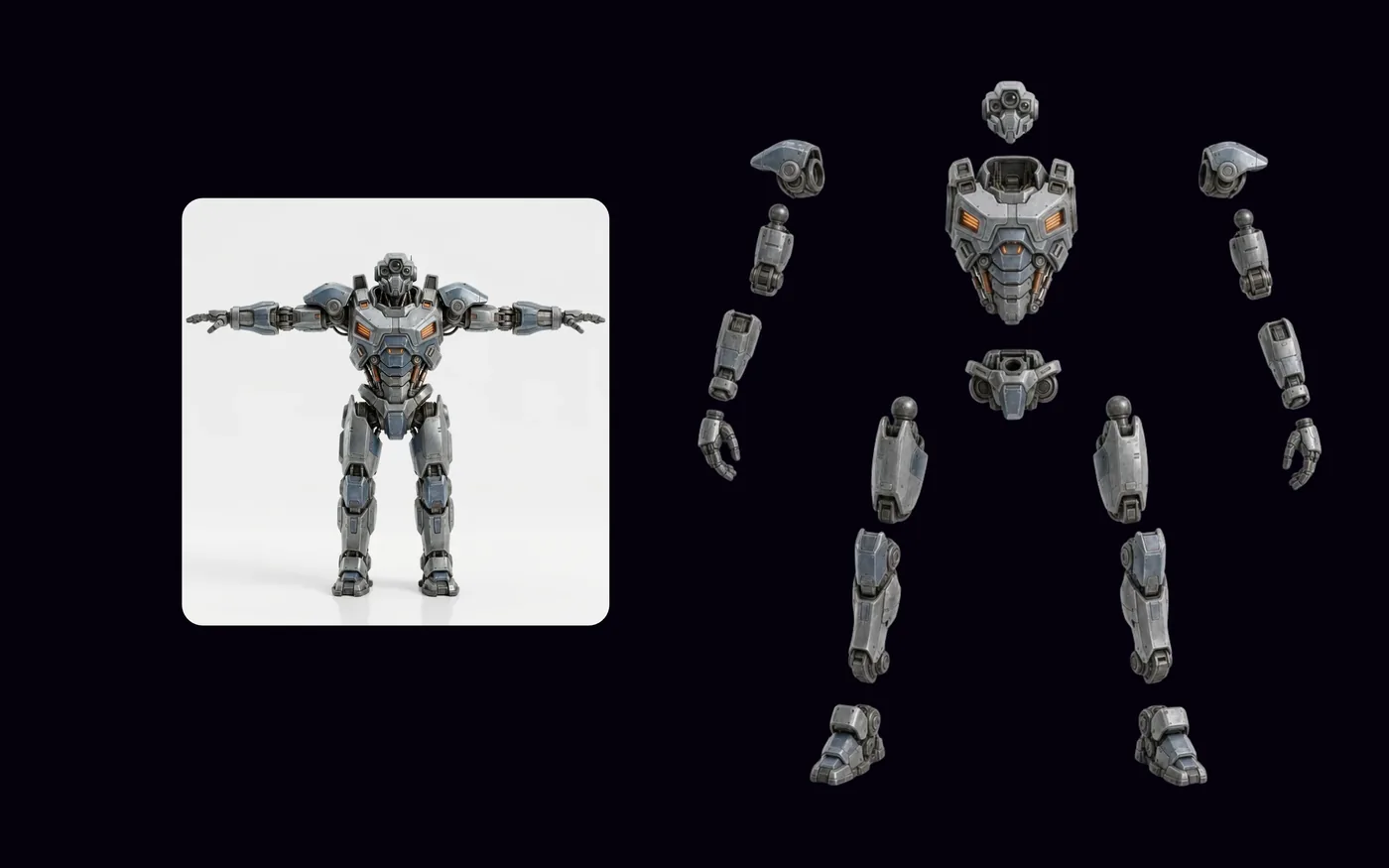
A full sci-fi mech character on the left split into separate components on the right — head, torso, arms, hands, legs and feet laid out as individual parts for modular 3D

Parts Breakdown

Split a concept into separate parts for modular 3D.

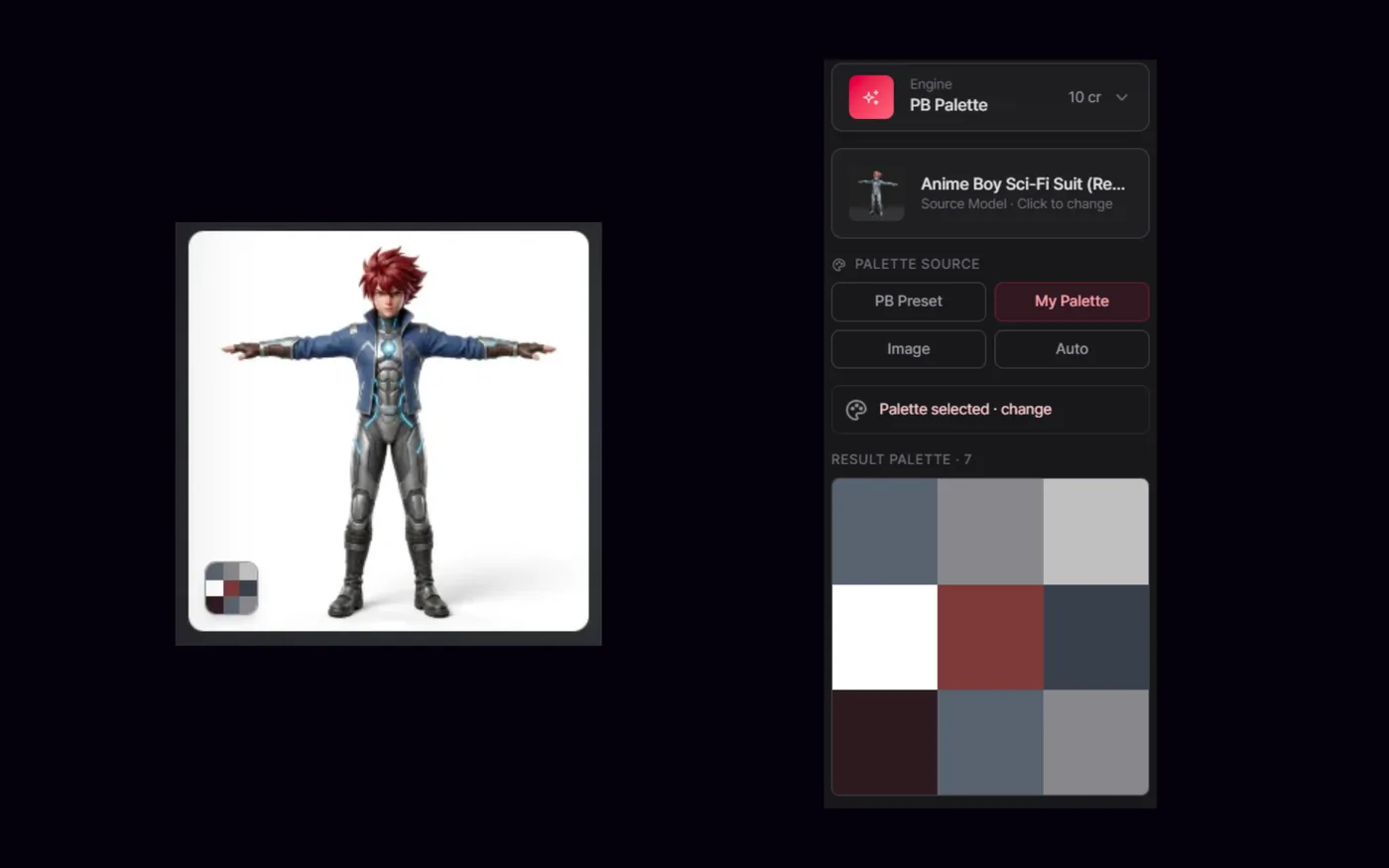
PicoBerry's PB Palette engine pulling a seven-swatch color palette from a sci-fi character image to reuse across assets

Extract Palette

Pull a color palette from any image to stay on-style.

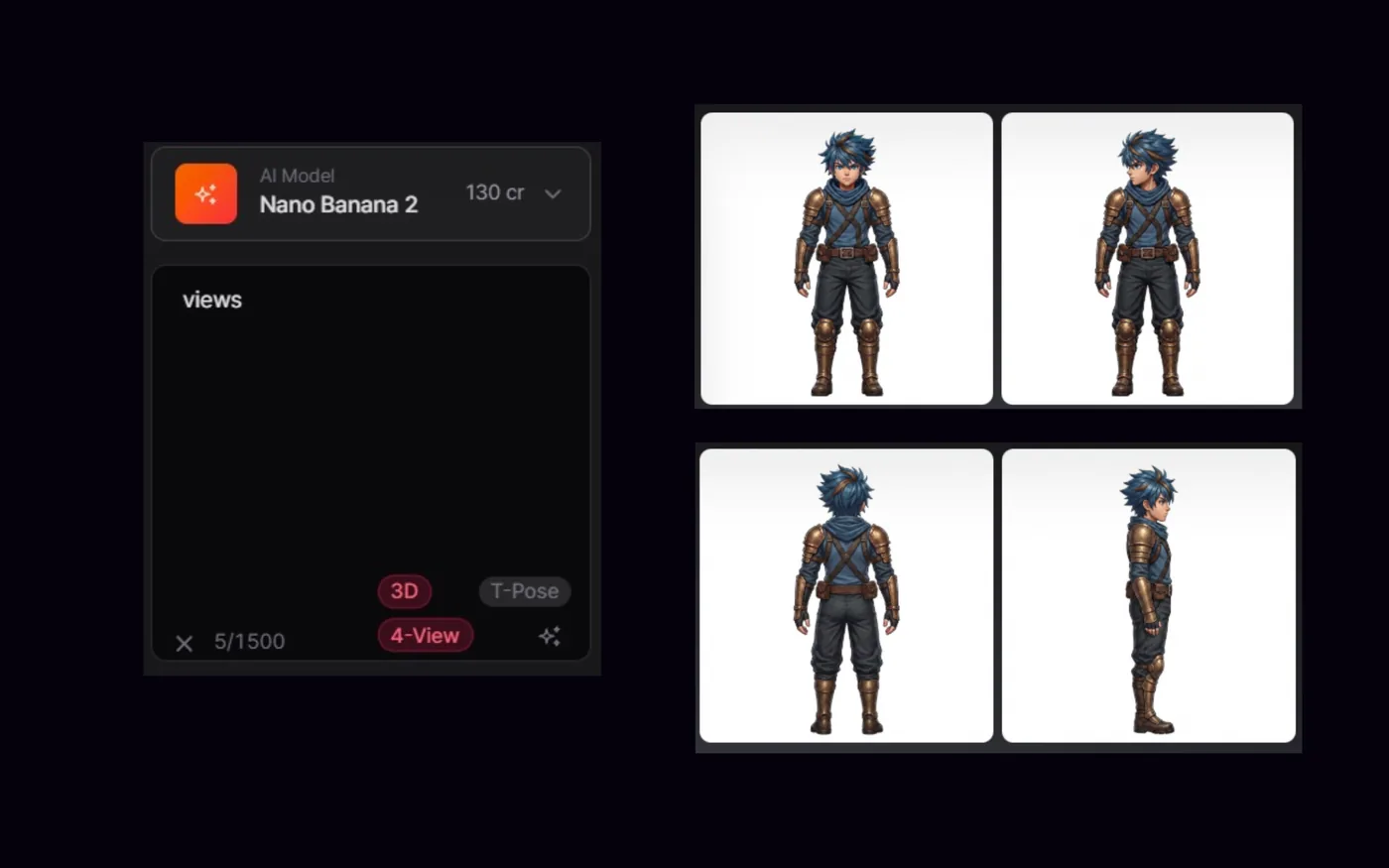
PicoBerry's image panel with the 4-View option enabled, generating front, three-quarter, back and side views of the same character to guide accurate 3D

4-View

Front, side and back views to guide accurate 3D.

3D generation

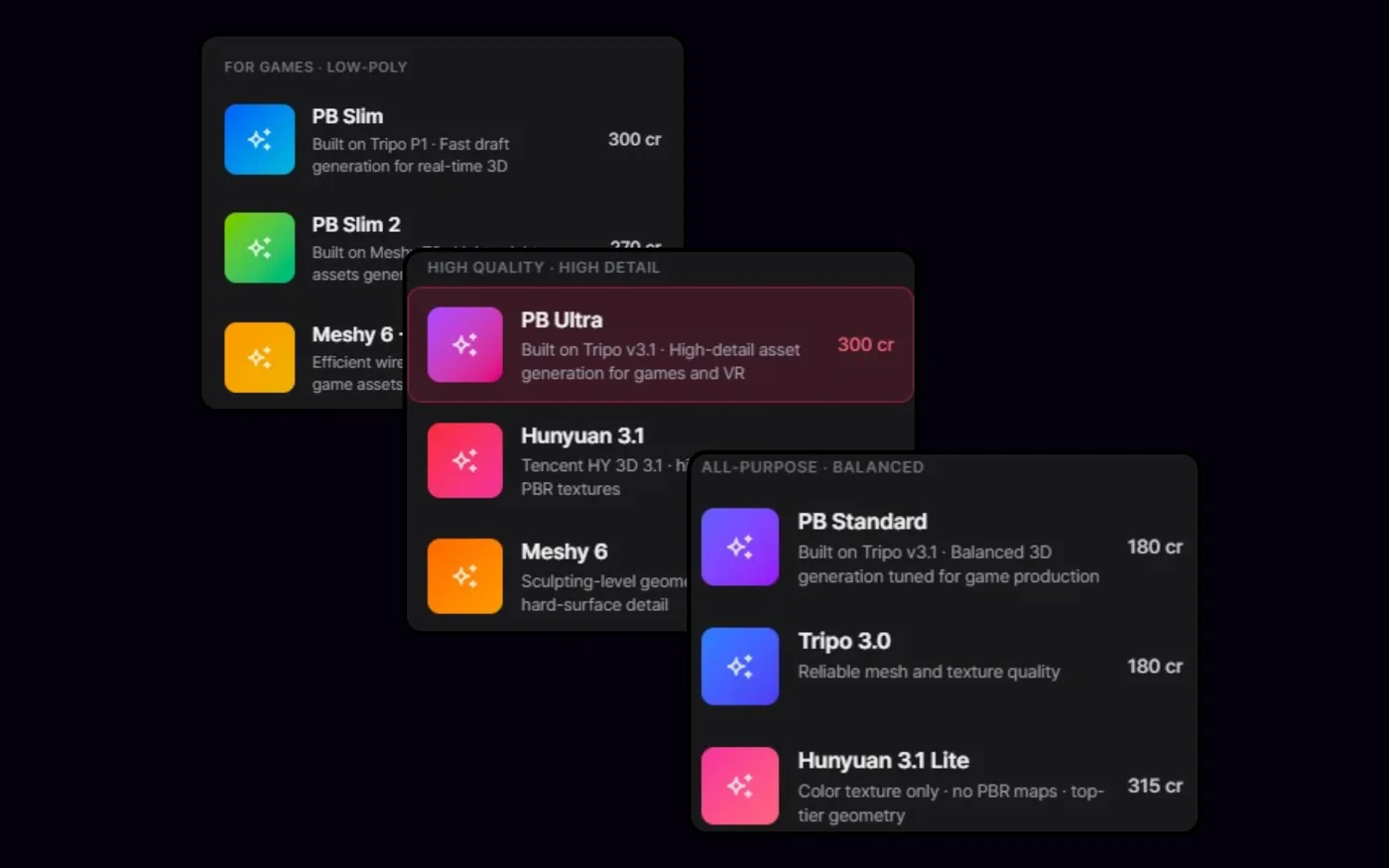
PicoBerry's engine picker grouped by need — low-poly engines like Meshy 6, high-detail engines built on Tripo v3.1 and Hunyuan3D 3.1, and balanced engines — each with its credit cost

Multi-Model Choice

Generate on Tripo, Meshy or Hunyuan3D — per asset.

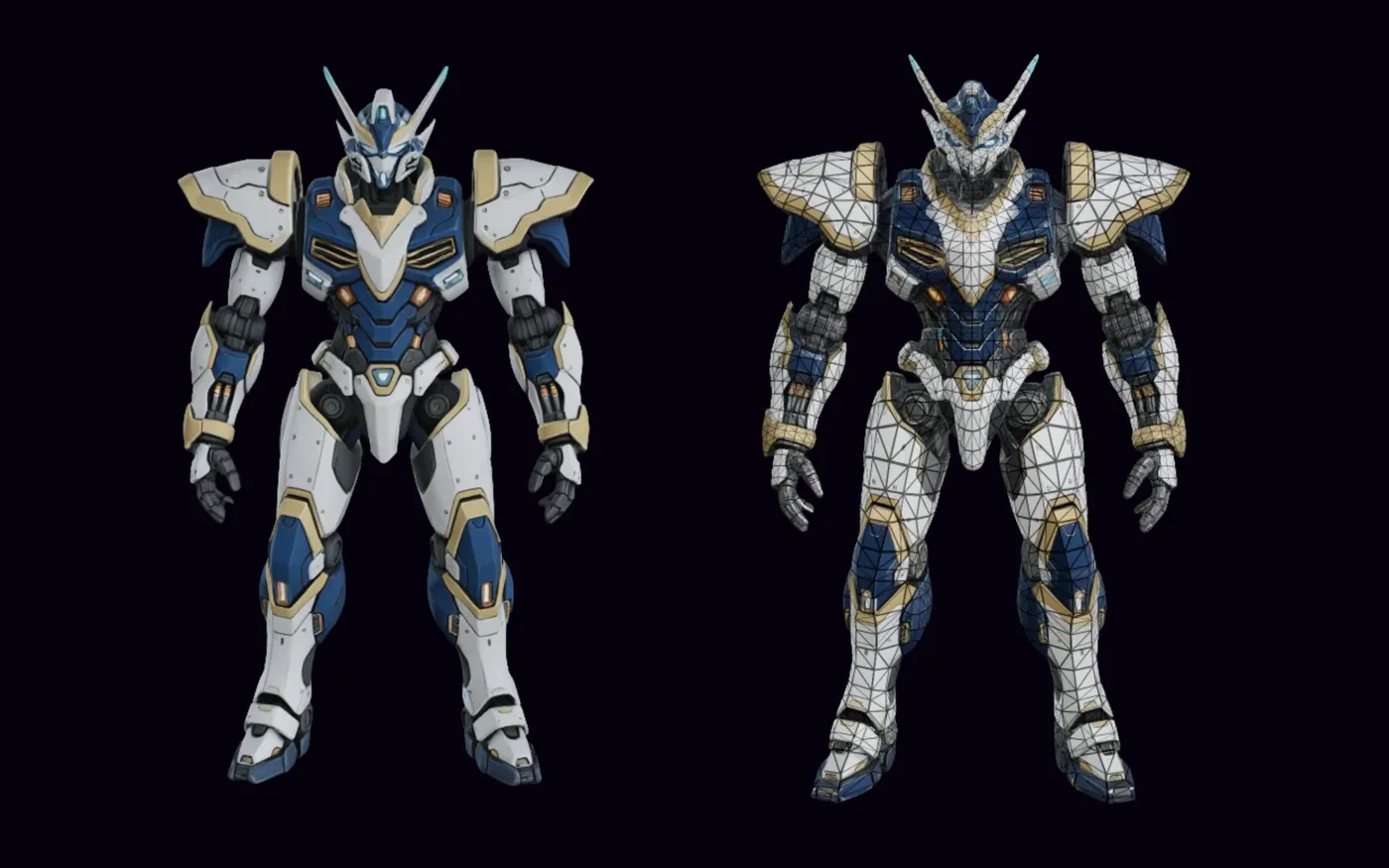
A blue-and-gold mech shown textured on the left and with its clean remeshed wireframe topology on the right, retopologized to a lower target poly count for game use

Remesh

Clean topology at a target poly count for game use.

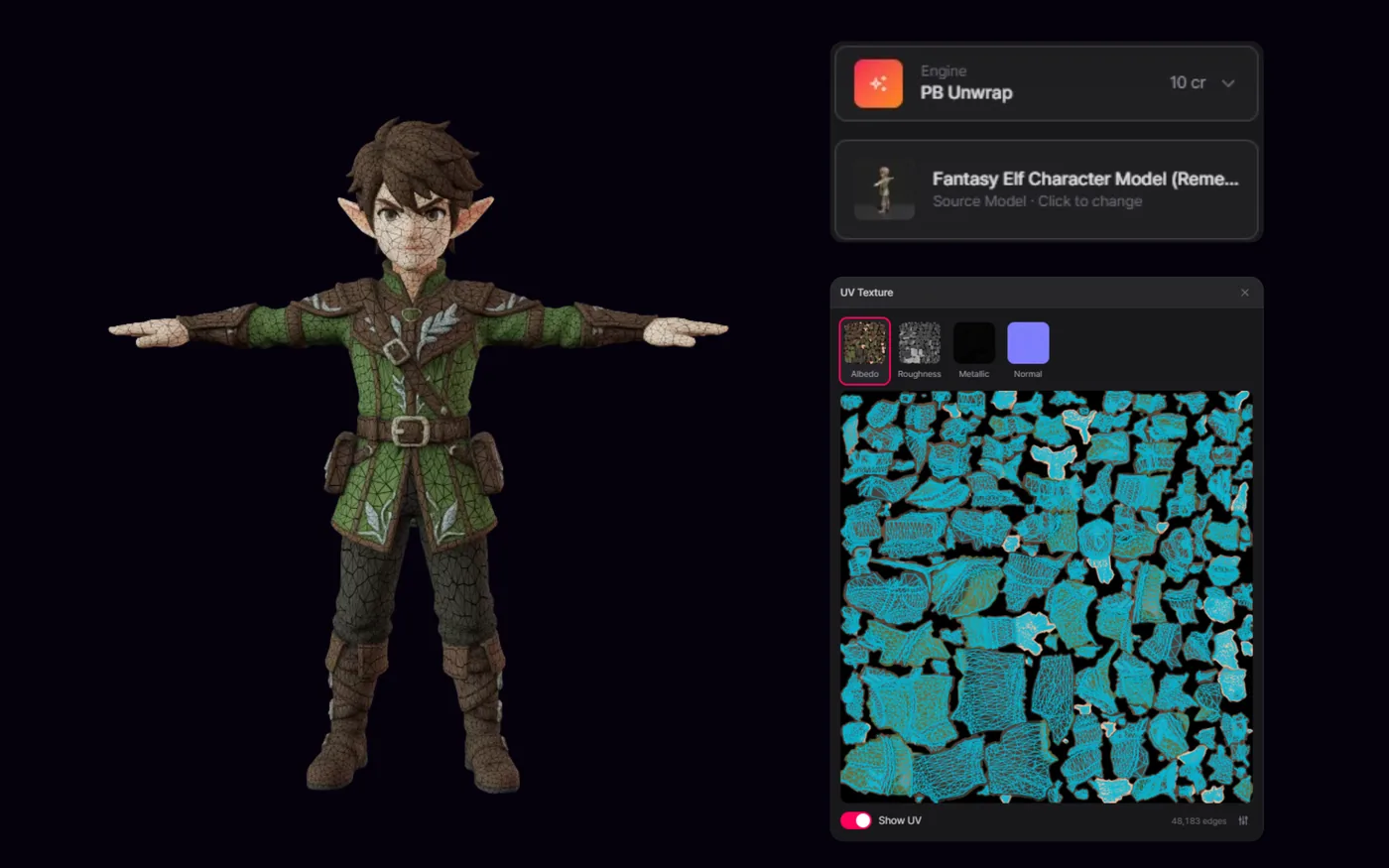
PicoBerry's PB Unwrap engine showing a fantasy elf character beside its unwrapped UV texture layout, with albedo, roughness, metallic and normal maps ready to texture

UV Unwrap

Unwrap UVs on the generated mesh, ready to texture.

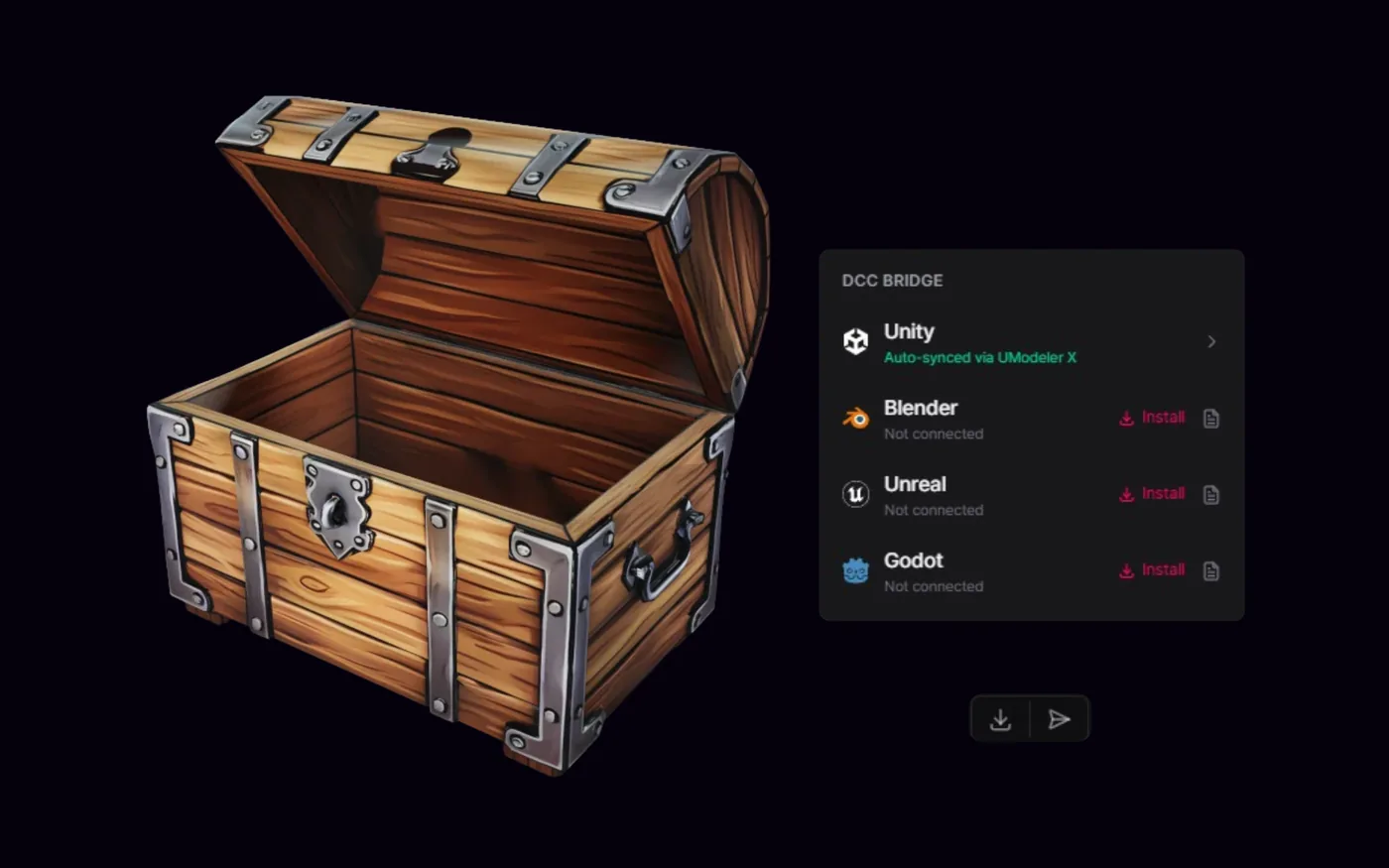
PicoBerry's DCC Bridge panel listing Unity auto-synced via UModeler X, with Blender, Unreal and Godot ready to install, beside a finished treasure chest asset

DCC Bridge

One-click send to Unity, Blender, Unreal or Godot.

Frequently Asked Questions

Which Tripo models can I use inside PicoBerry?
Tripo v3.1 is selectable per generation, so you are on the current generation rather than an older model wrapped in a platform. Tripo sits in the same engine dropdown as Meshy 6 and Hunyuan3D 3.1, and you can change engine between two generations of the same asset.
Is PicoBerry cheaper than Tripo?
Price isn't the reason to choose it. At entry level the two are roughly comparable; the difference is that one PicoBerry plan covers three engines, image generation, refine, UV and remesh, a bundled API and a free Unity editor. If you only ever generate on a single model at high volume, that vendor can be cheaper per model — but if you want a whole pipeline, PicoBerry does more with the same spend.
Does the Tripo API cost extra if I use PicoBerry instead?
You wouldn't use the Tripo API — you'd use PicoBerry's. Tripo's API is a separate product with its own billing (roughly $1 per 100 credits). PicoBerry's async /v1 API is included on all paid plans and spends the same credits as the web app, so there is one plan, one credit pool and one invoice covering both your artists and your services.
What about concurrency and batch throughput?
This is a genuine advantage for Tripo at its own tiers — Tripo Pro advertises 10 concurrent tasks, and its higher plans scale further for batch work. If you routinely fire large batches at a single vendor, benchmark that before switching; a wider engine choice does not compensate for a narrower queue.
How do the free tiers compare for evaluation?
Both offer a free tier for evaluation, and the practical difference is scope: PicoBerry's lets you run the same prompt across several engines and compare results before paying anyone, while Tripo's is for sampling its own model. Both free tiers are for personal, non-commercial use — a paid plan is needed to ship commercially.
What happens to commercial rights and model privacy?
Tripo grants private models and commercial use from Pro upward; its free tier outputs are public. PicoBerry grants a full commercial license on all paid plans, with the Free plan intended for personal use under CC BY 4.0. If commercial rights matter, both require a paid plan — check PicoBerry's Terms of Use for the current wording before shipping.
Can I keep using Tripo directly as well?
Yes, and for high-volume Tripo work that can be the right split: Tripo Max for bulk generation on its own models, PicoBerry for the assets that need a different engine, refine steps, or a Unity handoff. Everything exports as GLB, FBX or OBJ from both, so neither locks your assets in.
What does PicoBerry add for a Unity team specifically?
UModeler X, a Unity-native editing tool, is free on every PicoBerry plan including Free, and one-click bridges push assets into Unity, Blender, Unreal and Godot. FBX on the Unity texture preset arrives as a textured bundle with .meta files. Tripo does not bundle a Unity editing tool.
Same Tripo. Wider Pipeline.

Generate on Tripo v3.1 and two other engines, refine and UV in place, and push straight into Unity — all in one platform. Try it free before you commit to any single vendor.

Compare all plans